article
How to Choose a High Temperature Air Duct
A practical specification checklist covering temperature, pressure, material, diameter, movement and connection details.
Start with continuous and peak temperature
Continuous operating temperature is more important than the highest number printed in a catalog. Record normal airflow temperature, peak temperature, peak duration and any radiant heat near the duct. A short hot-air peak and constant contact with a hot metal surface are different design conditions.
Define the conveyed medium
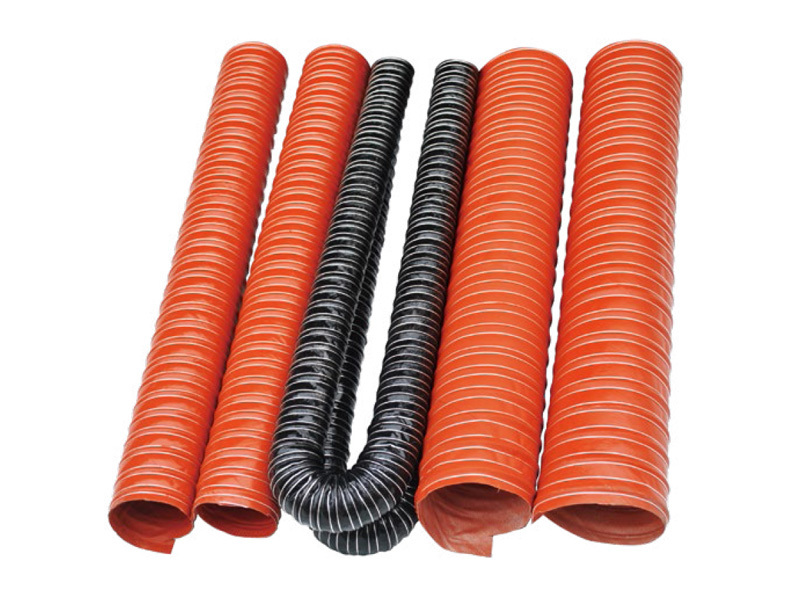
Clean air, exhaust gas, oil mist, powder and abrasive particles require different wall materials. Silicone fiberglass is widely used for hot air, while polyurethane is generally better for abrasive solids and metal ducting may be required for extreme heat or corrosive exhaust.
Check pressure and movement
Provide positive pressure, vacuum level, bend radius and movement frequency. A lightweight ventilation hose may collapse under suction, while an unnecessarily heavy hose can increase installation stress.
Specify connections and safety margin
Confirm inside diameter, length, end cuffs, clamps and grounding requirements. Select a construction with a reasonable temperature and pressure margin, then validate it in the actual system before full production.
Request a quote
Tell us the medium, temperature, pressure, diameter, length and quantity. Our team will respond shortly.
Thank you. Your inquiry has been received.