article
Silicone Fiberglass, PVC and PU Ducting: Which Material Fits the Job?
Compare silicone fiberglass, PVC fabric and polyurethane ducting by temperature, abrasion, pressure direction, movement and conveyed medium before selecting an industrial flexible hose.
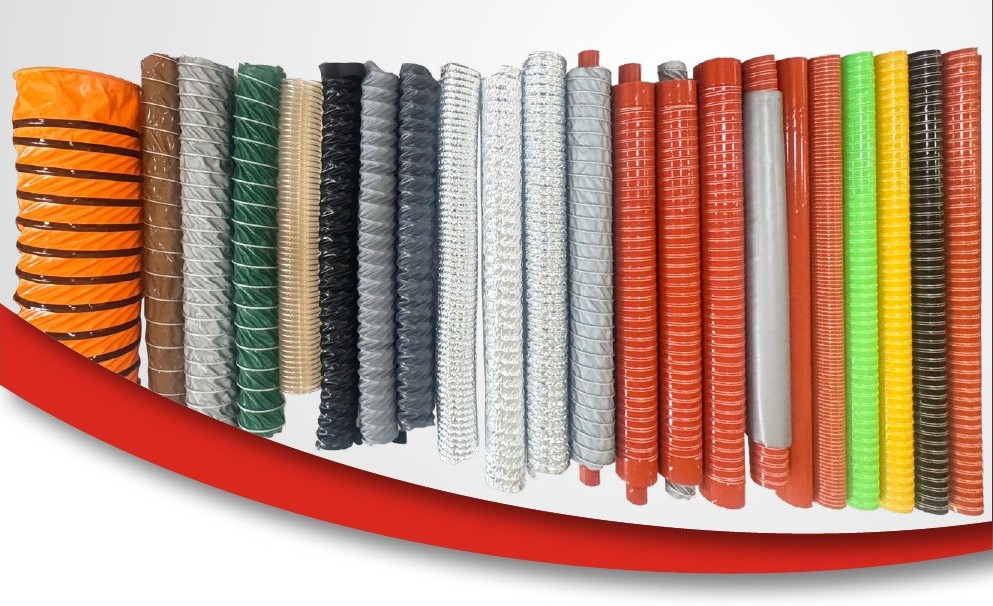
Choose around the duty, not the colour
Silicone fiberglass, PVC fabric and polyurethane hose are used for different industrial duties. The correct choice depends on the conveyed medium, normal and peak temperature, pressure or vacuum, movement, abrasion, installation route and connection detail. A red, orange or clear hose does not by itself identify a safe material class. Start by describing the system rather than asking for the strongest-looking wall.
Silicone fiberglass for hot air and flexible equipment connections
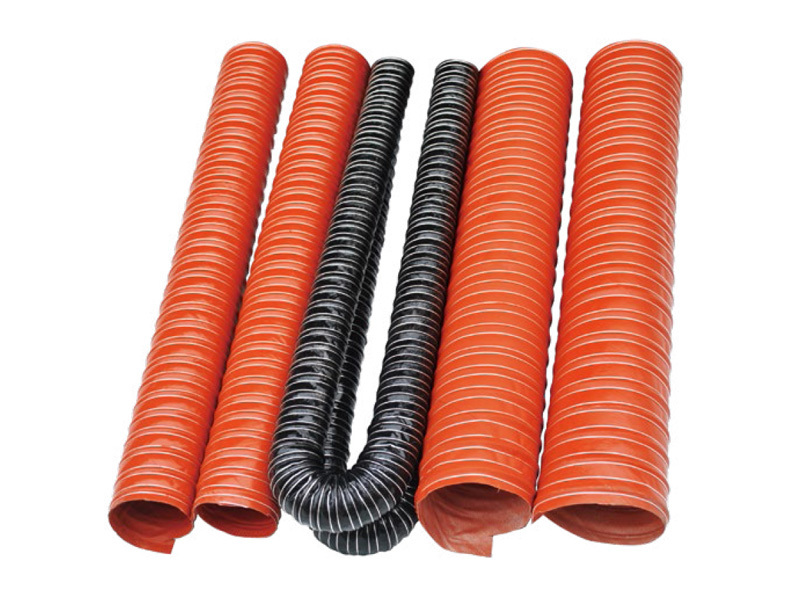
Silicone-coated fiberglass ducting is commonly considered where a flexible construction must transfer hot air or connect equipment operating above the practical range of general PVC ventilation duct. It can combine fabric reinforcement, a coated wall and spiral support. Confirm continuous and peak temperature, radiant heat, gas chemistry, pressure, movement and the required end cuffs or flanges before making a final selection.
PVC fabric for temperature-appropriate portable ventilation
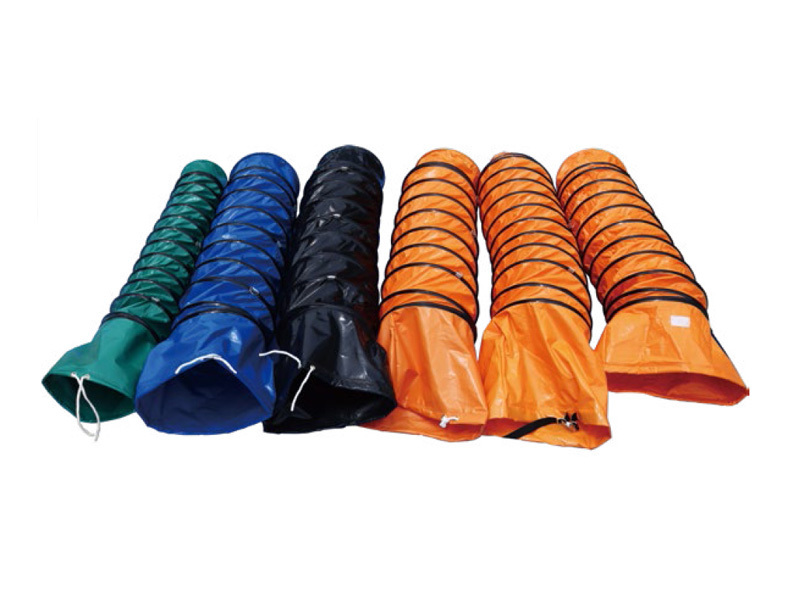
PVC-coated fabric ducting is often selected for portable fans, temporary air supply, tunnels, basements and general industrial ventilation when the air temperature and safety requirements are suitable. Telescopic designs improve transport and handling, but the installed length, compression, fan pressure, suspension and direction of airflow still affect performance. A positive-pressure air-supply duct and a suction duct should not be treated as interchangeable.
PU hose for abrasive solids and suction duties
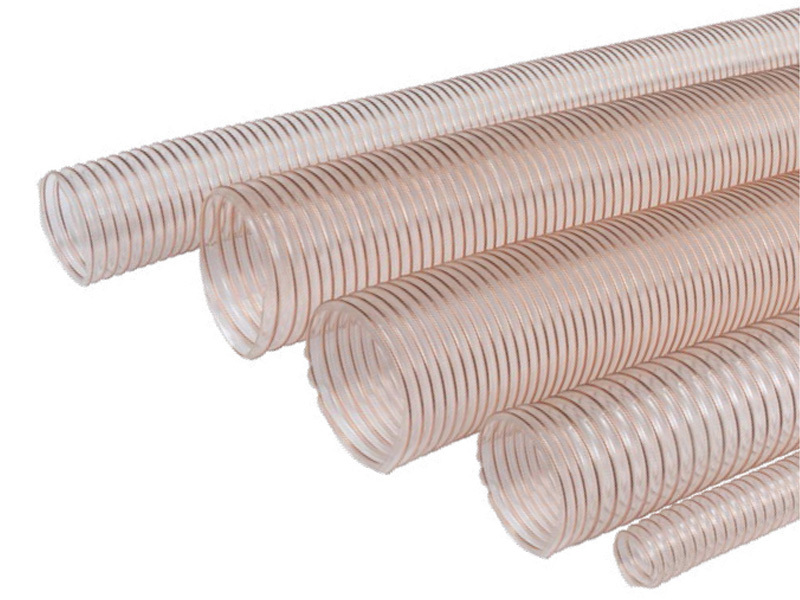
Polyurethane duct hose is typically considered for dust, chips, granules and other abrasive conveyed materials where ordinary fabric ventilation duct would wear too quickly. Specify particle size, sharpness, moisture, temperature, air velocity, vacuum level and any grounding requirement. Wall thickness and spiral reinforcement should match the material and pressure direction; a food-contact or anti-static requirement must also be confirmed for the intended market and process.
Send a complete material-selection brief
For a practical recommendation, send the medium, normal and peak temperature, pressure or vacuum, diameter, length, bend radius, movement, equipment connection and quantity. This lets the supplier compare silicone fiberglass, PVC and PU ducting against the actual application. The comparison should also include installation limits and validation needs, not only initial product price.
Related content
 PRODUCT
Silicone High Temperature Air Duct
Double-wall silicone fiberglass ducting with a smooth inner wall for hot air, engine heating and high-temperature process exhaust.
↗ PRODUCT
PVC Multi-Purpose Telescopic Hose
Large-diameter PVC mesh duct for portable fans, tunnels, basements, firefighting and temporary ventilation.
↗ PRODUCT
TPU Polyurethane Steel Wire Hose
Food-grade abrasion-resistant TPU hose for powder, granules, chips, dust and industrial suction systems.
↗Request a quote
Tell us the medium, temperature, pressure, diameter, length and quantity. Our team will respond shortly.
Thank you. Your inquiry has been received.