article
Flexible Duct Bend Radius and Installation Clearance Guide
Prevent excessive pressure loss, kinking and premature wear by planning bend radius, supports and clearance for industrial flexible ducting.
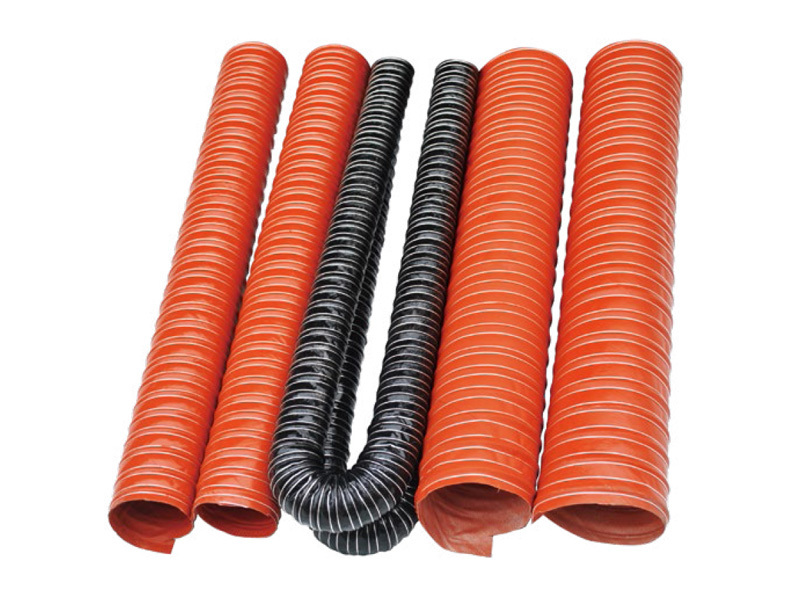
A tight bend changes the duct section
When flexible ducting is bent too tightly, the inside section can reduce and the wall can rub or kink. This increases resistance and may shorten service life. The minimum practical bend radius depends on diameter, reinforcement, material, insulation and whether the duct moves in service.
Support the route, not only the ends
Long spans need support that does not pinch the wall or concentrate load on one spiral. Keep the duct clear of sharp edges, hot surfaces and moving equipment. The support pattern should allow inspection of clamps, cuffs and the first bend at the machine.
Send route information with the enquiry
A route sketch or installed photograph is valuable for custom flexible ducting. Include diameter, length, bend locations, clearance, movement, temperature and vacuum or pressure. This helps identify whether a different duct construction or connection location would make installation more reliable.
Request a quote
Tell us the medium, temperature, pressure, diameter, length and quantity. Our team will respond shortly.
Thank you. Your inquiry has been received.