article
How to Estimate Airflow Velocity in an Industrial Flexible Duct
Use airflow, duct area and route conditions to estimate velocity before choosing an industrial flexible duct diameter.
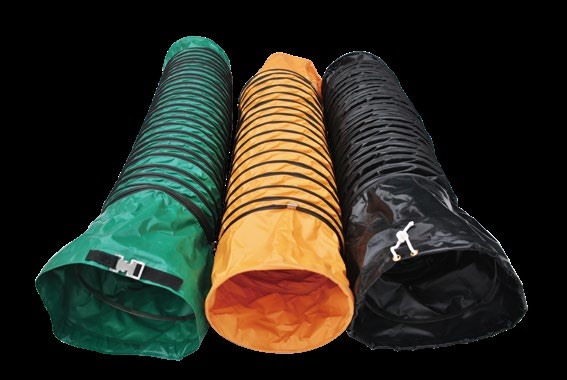
Use airflow and effective area
Air velocity is estimated from airflow divided by the duct cross-sectional area. This first calculation helps compare candidate diameters, but it is not a complete system design. The installed flexible duct may have corrugations, bends, compression and fittings that change the actual resistance.
Avoid treating velocity as the only answer
Very high velocity can increase noise, pressure loss and abrasive wear, while low velocity may be unsuitable for some dust or particle duties. The best range depends on the conveyed medium, system purpose and fan capability. Confirm the process requirement with the responsible ventilation designer.
Include route details in the selection
For an engineering review, provide airflow, fan static pressure, diameter, length, bends, temperature, pressure direction and material being conveyed. This information lets a flexible duct manufacturer identify likely construction and connection limits without making unsupported performance claims.
Request a quote
Tell us the medium, temperature, pressure, diameter, length and quantity. Our team will respond shortly.
Thank you. Your inquiry has been received.