article
Buying 450°C or 800°C Flexible Duct: What to Verify
Industrial buyer checklist for verifying duty, construction, connections and validation before ordering 450°C or 800°C flexible ducting.
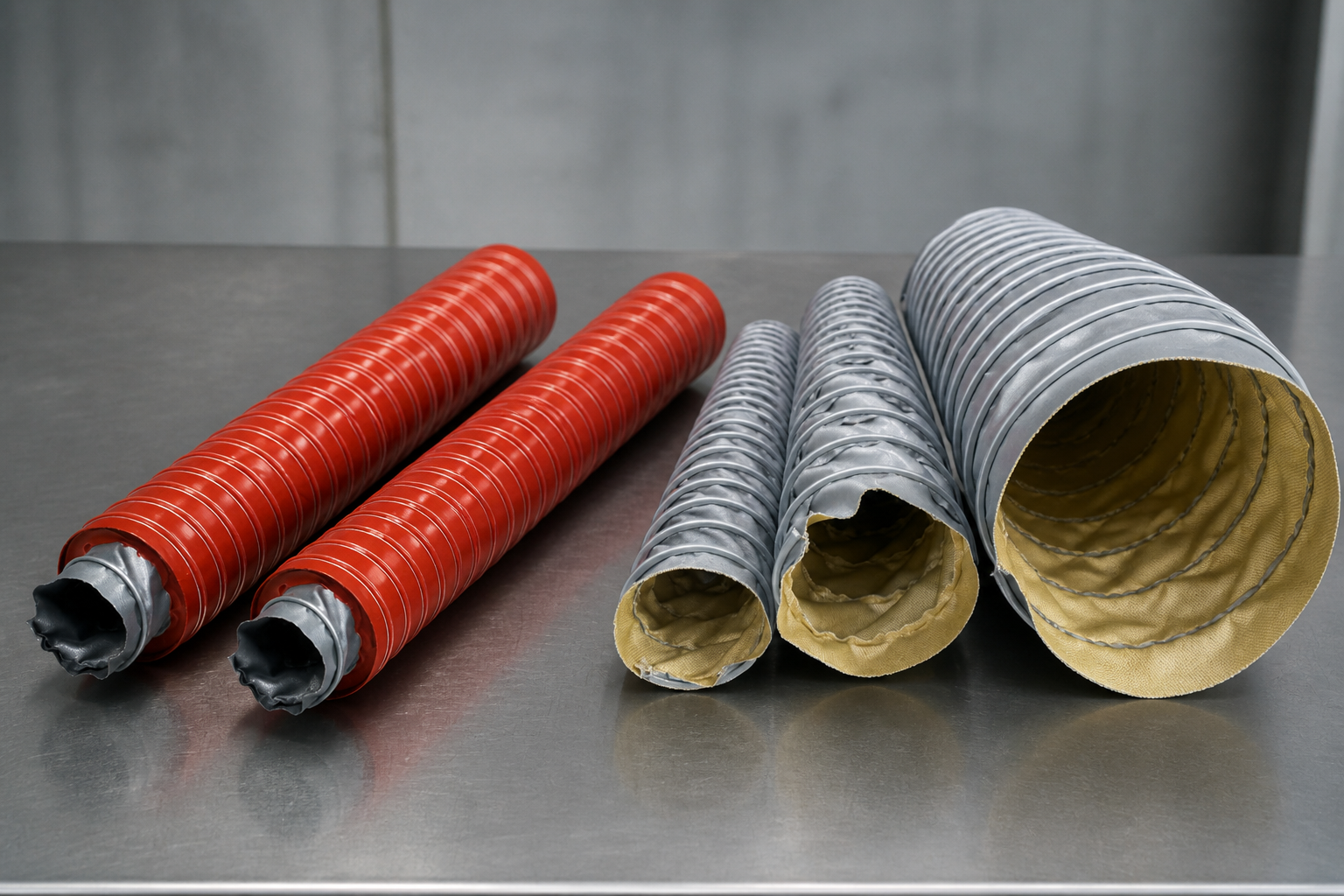
A temperature label is not the complete specification
Searches for a 450°C flexible duct or 800°C flexible duct usually come from a real high-heat problem, but the number alone cannot select the hose. Buyers must distinguish continuous process temperature from a short peak, the duration and frequency of the peak, temperature at the duct inlet, external radiant heat and accidental contact with hot surfaces.
Temperature capability belongs to an exact construction. Fabric, coating, insulation, reinforcement, clip system, seam and end connection may not share the same limit. Request the supplier's basis for the stated range and confirm which conditions still require application testing.
Identify what actually flows through the duct
Clean hot air, oven exhaust, combustion products, welding fume and process gas place different demands on a flexible duct. State whether the stream contains oil mist, condensate, dust, sparks, abrasive particles or chemicals. A duct selected for clean recirculated hot air should not automatically be applied to an aggressive exhaust stream.
Pressure direction also matters. Suction can deform a construction that performs acceptably under low positive pressure. Provide available fan or process pressure, diameter, length and route so the manufacturer can review reinforcement and installed behaviour rather than relying on the temperature headline.
Compare insulated and clip-on constructions
An insulated 450°C duct may be considered when heat retention, outer-surface exposure or equipment protection is important. Insulation increases outside diameter, weight and bending stiffness, so routing clearance, supports and clamp access need to be checked before ordering.
Higher-temperature clip-on telescopic ducts use different construction principles and may be chosen for demanding exhaust or hot-air duties. They are not automatically the best option for every route. Movement, pressure, abrasion, external conditions and connection geometry still determine whether the construction is practical.
Verify diameter, length and bend clearance
Measure the real equipment spigot or flange and state whether the value is inside or outside diameter. Record the installed face-to-face distance and the route at operating condition. A flexible duct that is stretched tight between two connections cannot absorb movement, while excessive length can sag, create sharp bends and increase pressure loss.
Check the first bend near the hot equipment. Allow space for the selected bend radius, insulation thickness, support and end clamp. If the route moves during maintenance or production, describe the direction and amount of movement so the working length can be reviewed.
Treat cuffs and flanges as part of the hot assembly
The duct body may be suitable while the end connection remains the weak point. Provide drawings or photographs for cuffs, clamps, reducers and flanges, including mating diameter, bolt pattern, available clamp width and nearby heat. Confirm whether the connection must be removed regularly.
For custom high temperature flexible ducting, approve the complete assembly rather than a loose material sample. Fit, sealing, bend clearance and access should be checked on the actual equipment or a representative fixture before a larger production order.
Ask for evidence that matches the exact construction
A general material data sheet is useful background, but it may not describe the finished hose, seam, insulation or connector. When the project requires test data, flame performance or a market-specific document, ask which exact product and revision the evidence covers. Avoid copying a broad temperature or compliance statement from a different construction.
The responsible equipment or process engineer should define the required validation. Depending on risk, this may include sample fit, controlled operating exposure, dimensional inspection or other project-specific checks. A catalogue rating does not replace system-level approval.
Common questions before choosing a temperature class
Does the higher temperature number automatically provide longer service life? No. Service life depends on the actual construction, duty cycle, pressure, bending, abrasion, medium and installation. An unnecessarily severe construction may add stiffness, outside diameter and cost without solving the real failure mode.
Can a buyer select from a product photograph? A photograph can identify a general construction, but it cannot confirm layer system, reinforcement, temperature basis, diameter, pressure behaviour or end design. Use the photograph to start the discussion, then control the order with written specifications and drawings.
Is one sample enough for production approval? A sample can confirm fit and visible construction for the stated configuration. It does not automatically validate every diameter, temperature exposure or equipment model. Define which features the sample proves and which tests or engineering approvals remain the buyer's responsibility.
Pre-order checklist for 450°C and 800°C ducting
Include equipment type, medium, continuous temperature, peak temperature and duration, pressure direction, diameter, working length, bends, external heat, movement, end connections, quantity and destination. Mark every unknown item rather than leaving it out. Unknown process data should become an action before final selection.
Jouduct can review this information against available insulated and clip-on high temperature duct constructions. The recommendation and quotation should identify the proposed product, open technical points, custom details and any sample or validation step required before mass production.
Related content
 PRODUCT
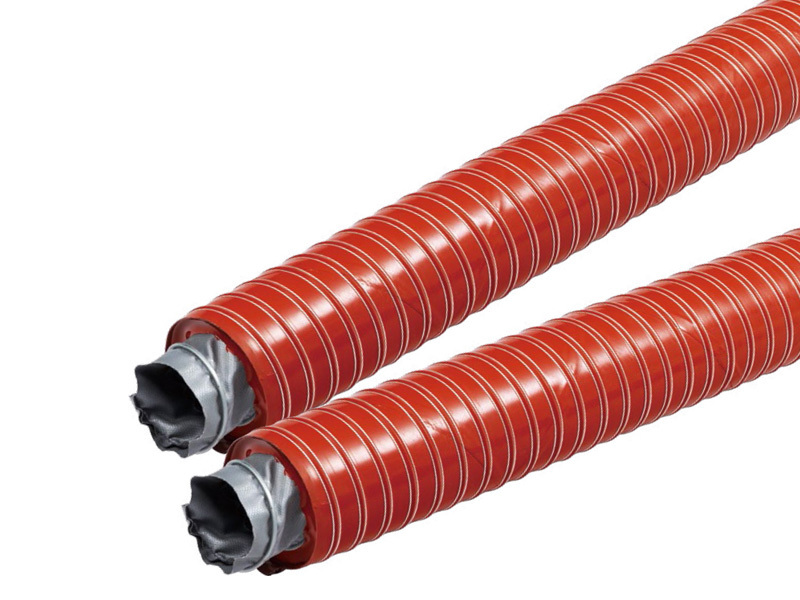
450°C Clip-Type Thickened Insulated Duct
Thick insulated connection using a metal-clipped high-temperature inner duct for demanding exhaust and heat-transfer systems.
↗ PRODUCT
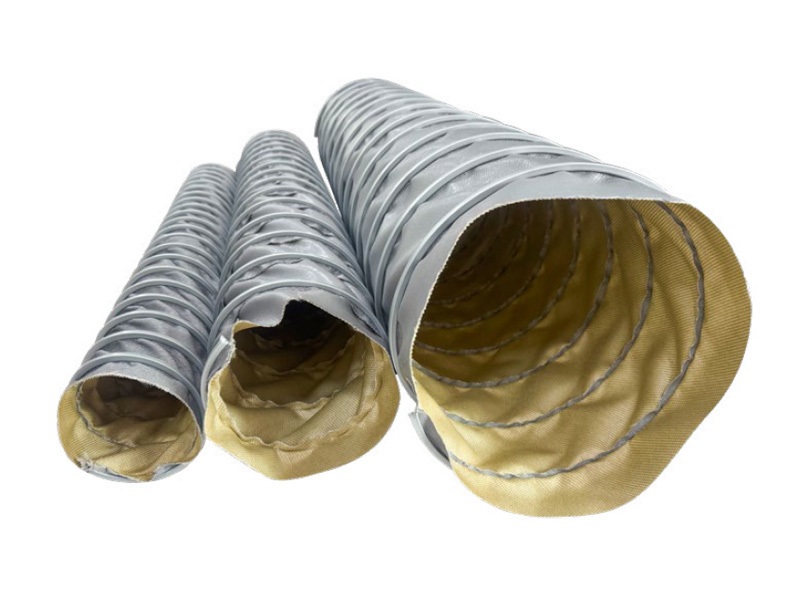
800°C Clip-on Telescopic Duct
Special high-temperature clip-on duct for short-duration extreme heat, furnace exhaust and hot gas extraction.
↗APPLICATIONIndustrial Ovens & Furnaces
High-heat exhaust, recirculation and insulated transfer solutions for ovens, furnaces and heat-treatment lines.
↗Request a quote
Tell us the medium, temperature, pressure, diameter, length and quantity. Our team will respond shortly.
Thank you. Your inquiry has been received.