article
Flexible Duct Supply for Industrial Oven and Dryer OEMs
OEM specification checklist for sourcing high temperature flexible duct connectors used on industrial ovens, dryers and hot-air equipment.
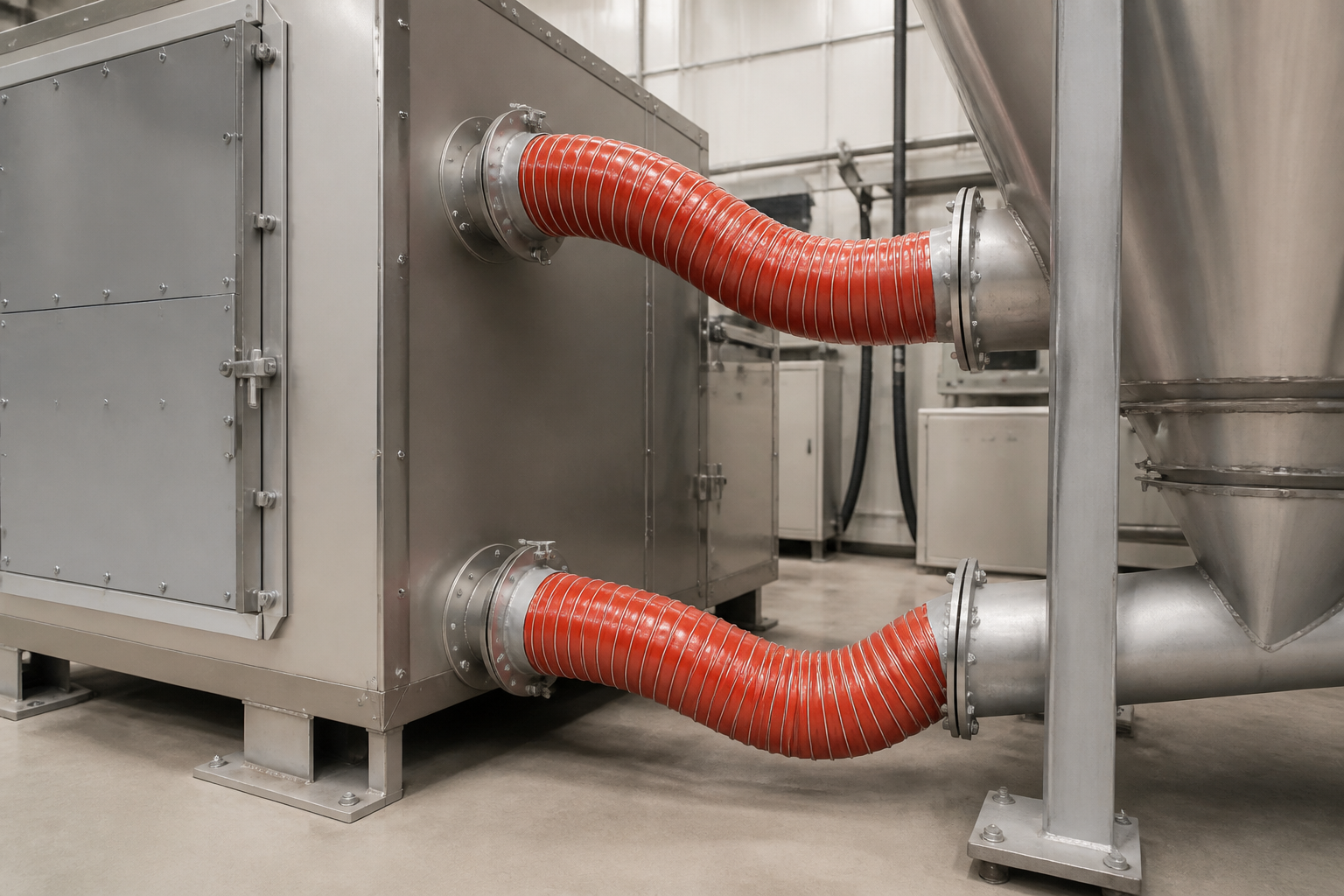
Define the duct's function inside the equipment system
Industrial oven and dryer manufacturers may use flexible ducting for hot-air supply, recirculation, exhaust, vibration isolation or maintenance access. Each position can have a different temperature, pressure, medium and movement. A single hose specification should not be copied across every connection without reviewing the duty.
Map each flexible section on the equipment drawing and assign an internal part number. Record whether it carries clean heated air, return air or process exhaust, then add the continuous and peak temperature at that location. This creates a practical basis for an OEM flexible duct supplier to review the construction.
Measure temperature where the duct operates
The oven setpoint is not always the same as the duct inlet temperature. Consider process cycles, heat soak, startup, shutdown and radiant heat from nearby panels or burners. Identify peak duration and frequency rather than providing only the highest number seen in the equipment specification.
If a duct is described as 450°C or 800°C, confirm that the stated capability applies to the finished construction and the expected exposure. Insulation, reinforcement, seams and end connections must be included in the review.
Include pressure, airflow and exhaust content
State whether the duct operates under positive pressure or suction and provide available fan or process data. Long routes, compressed hose, tight bends and reducers add resistance. Under negative pressure, reinforcement and unsupported length also influence whether the duct keeps its section.
For exhaust duty, describe moisture, oil mist, dust, fumes, condensate or chemical exposure. The equipment manufacturer remains responsible for the complete ventilation and safety design, while the duct supplier uses this information to avoid recommending a construction based on heat alone.
Design the flexible section around movement
A short flexible connector can isolate vibration or accommodate assembly tolerance, but it must not be installed under tension. Record installed face-to-face length, axial movement, lateral offset and expected maintenance movement. Allow bend clearance and support without pinching the hose wall.
For thermal expansion, identify which equipment or rigid duct section moves during heating. More hose length is not always better; excessive slack can sag into a hot surface or create a sharp bend. Review the route at operating condition.
Control equipment interfaces with drawings
Provide both mating connection dimensions, including inside or outside diameter, cuff engagement, clamp width, flange face, bolt pattern and nearby obstructions. For a custom flexible duct connector, include the complete assembly drawing and installed orientation.
Approve a sample at the actual oven, dryer or representative fixture when fit is critical. Check sealing, clamp access, working length, movement, bend clearance and removal for service. Record changes before the product enters the equipment bill of materials.
Build repeat-order control into the BOM
The OEM record should include supplier part number, internal part number, drawing revision, material construction, critical dimensions, approved image, packing and inspection points. If a product is used on multiple equipment models, identify which conditions and connection drawings apply to each model.
Ask the supplier to communicate proposed changes before production. A stable repeat-order reference helps avoid unintended substitution and reduces the need to rebuild the technical discussion each time an equipment batch is released.
Common OEM purchasing questions
Should the OEM buy a standard hose or request a custom connector? A standard product is efficient when its diameter, length, construction and ends match the equipment. A custom connector is justified when flange geometry, controlled working length, insulation, movement or repeatable assembly cannot be achieved with a standard roll and separate hardware.
How many prototypes are needed? The answer depends on the number of connection types, equipment models and validation steps. One sample may prove one interface, while different diameters or movements may require separate checks. Define the approval matrix before sampling so each prototype has a clear purpose.
Can flexible duct replace an entire rigid duct run? Flexible sections are normally selected for connection, movement, routing or service needs. Long flexible runs can add resistance, support requirements and wear points. The equipment designer should decide where rigid and flexible sections belong within the complete airflow system.
What information should stay in the machine file? Keep the approved drawing, supplier and internal part numbers, construction description, inspection points, sample evidence, installation notes and revision history. This supports service parts and repeat production after the original project team has moved on.
Prepare an OEM sourcing package
Send equipment type, duct function, medium, continuous and peak temperature, pressure direction, diameter, working length, movement, bend route, end connections, quantity per machine, annual volume, destination and required documents. Separate prototype quantity from expected production demand.
Jouduct can compare available silicone, insulated, clip-on and flexible connector constructions against this package. Any recommendation should remain tied to the stated service conditions, and final equipment validation should be completed before serial production.
Related content
 PRODUCT
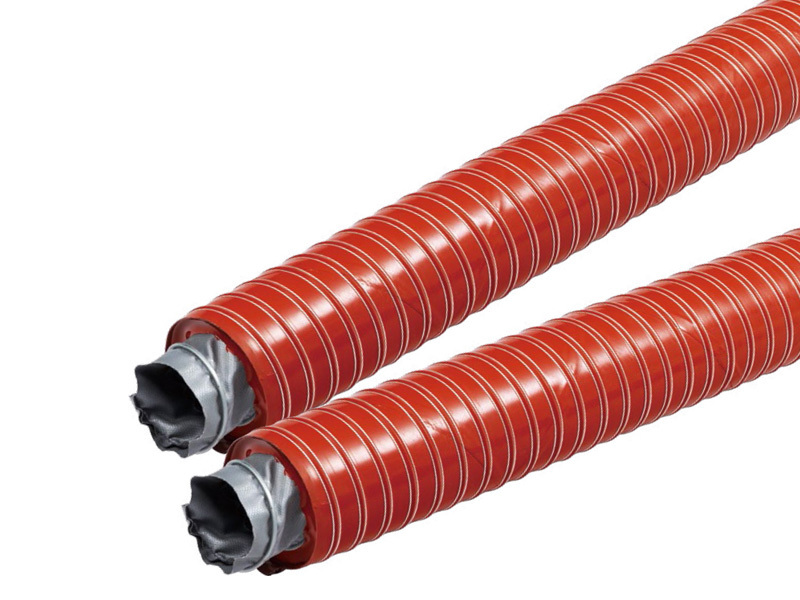
450°C Clip-Type Thickened Insulated Duct
Thick insulated connection using a metal-clipped high-temperature inner duct for demanding exhaust and heat-transfer systems.
↗ PRODUCT
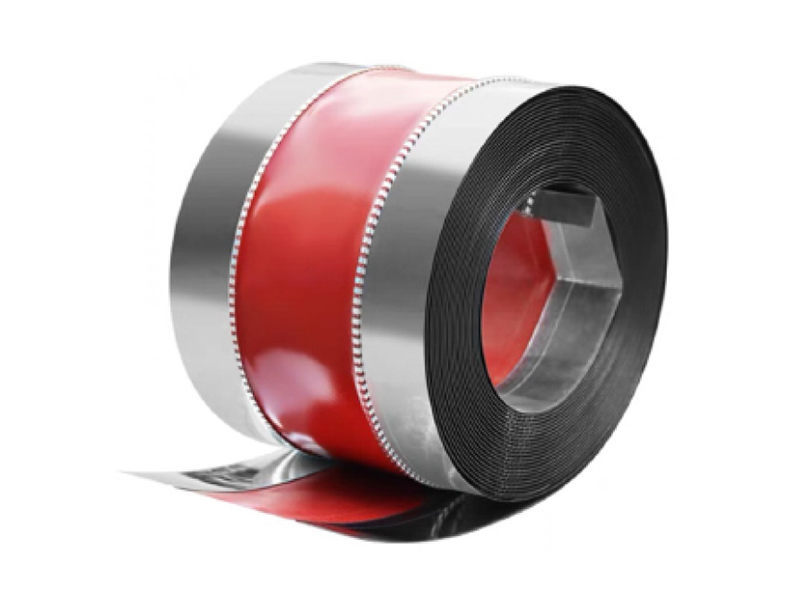
Silicone-Coated Fiberglass Flexible Connector
Heat-resistant silicone-coated fiberglass flexible connector for hot-air equipment, fans, ovens and industrial process ducting.
↗ APPLICATION
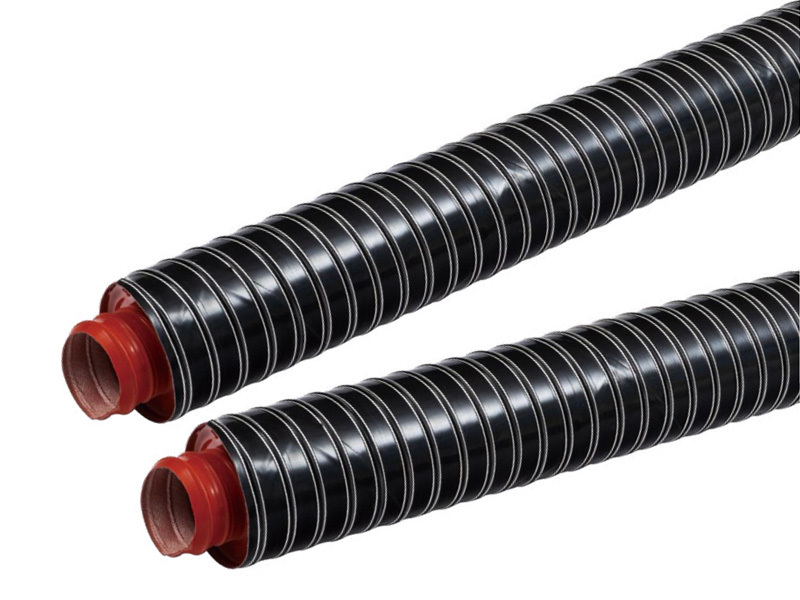
Plastic Processing & Dryers
Flexible hot-air ducting for resin dryers, hopper systems, extrusion equipment and process ventilation.
↗APPLICATIONIndustrial Ovens & Furnaces
High-heat exhaust, recirculation and insulated transfer solutions for ovens, furnaces and heat-treatment lines.
↗Request a quote
Tell us the medium, temperature, pressure, diameter, length and quantity. Our team will respond shortly.
Thank you. Your inquiry has been received.